The industry’s biggest risk isn’t bad data. It’s waiting for perfect data while equipment fails and expertise walks out the door.
Author: Cody Berra
Title: Senior Solutions Consultant at UptimeAI
Last week at ARC Advisory Group’s ARC Forum 2026 in Orlando, one theme surfaced in nearly every session: get your industrial data foundation right before you deploy AI. Unify IT/OT/ET data. Clean your asset hierarchies. Build knowledge graphs. Establish governance. Only then, the narrative goes, are you ready?
I agree with the spirit. A strong data foundation matters. But the industry is oversimplifying the relationship between data maturity and AI value in a way that’s creating a paralysis that costs far more than imperfect data ever would.
The problem starts with treating all AI the same
Closed-loop process control demands deterministic, real-time data with tight latency, fully contextualized tag relationships, and high signal integrity. The tolerance for ambiguity is extremely low. Predictive maintenance and diagnostic AI are fundamentally different because they’re probabilistic, pattern-based, hypothesis-generating, and human-in-the-loop. The question isn’t “Is the data perfect?” It’s “Is there enough signal to detect abnormal behavior and generate actionable insight?” In most cases, even with incomplete data, the answer is yes.
Conflating these two use cases is the core mistake. Closed-loop control demands precision; predictive diagnostics demand signal. By holding both to the same standard, we delay value from the one that could be delivering it right now.
Your best engineers already prove this every day
The best engineers in any plant rarely operate with perfect information, and yet they recognize system-level behavior from partial sensor coverage, infer upstream causes from downstream symptoms, and diagnose problems using historian data with gaps and inconsistent tagging. They don’t wait for a pristine knowledge graph, they work with what’s available and they’re usually right.
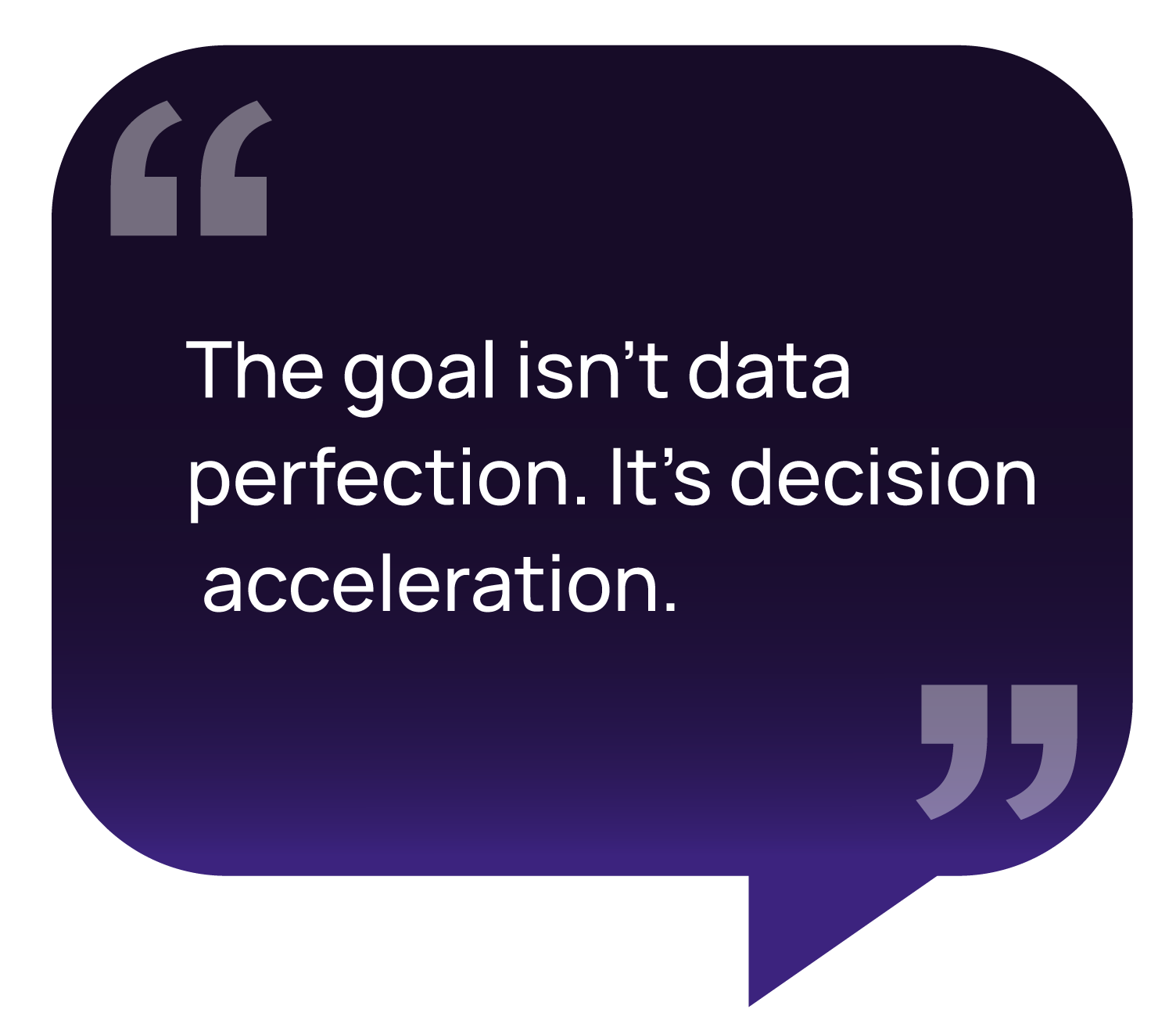
The AI systems worth deploying can do the same, and the most effective architectures apply structured domain skills like failure mode logic, trending analysis, criticality scoring; orchestrated by purpose-built agents that sequence them into diagnostic workflows grounded in engineering reality. They operate at the system level, not on isolated tags. The goal isn’t data perfection. It’s decision acceleration.
Knowledge graphs don’t have to come first either
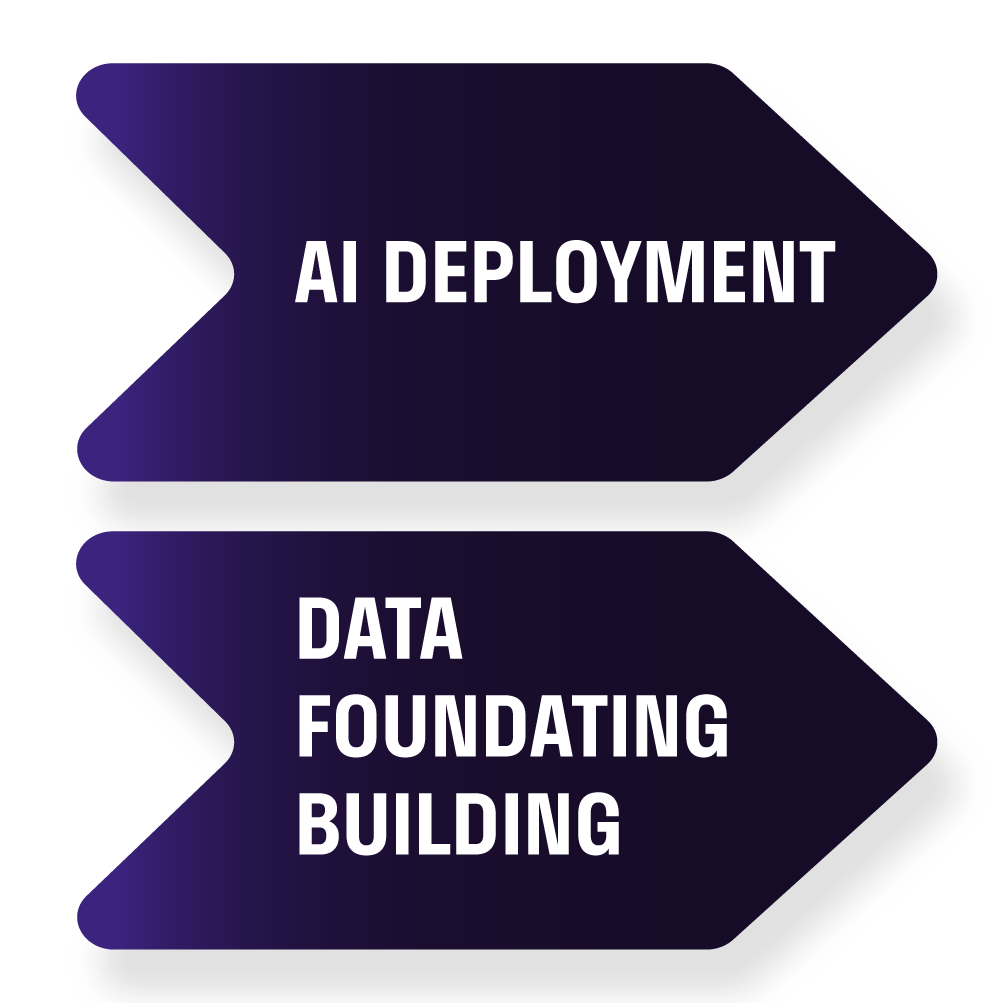
Knowledge graphs were another dominant theme at ARC, with the prevailing view being that you build the graph first, then deploy AI, but that sequencing deserves a challenge.
With today’s AI capabilities, knowledge graphs can be generated from P&IDs using computer vision, inferred from tag naming conventions, constructed from time-series correlations, and auto-built from unstructured documentation, which means the knowledge graph becomes a living artifact created and continuously refined by AI itself. The foundation and the deployment don’t have to be sequential. They can happen at the same time.
The real cost of waiting
At the ARC Forum I had conversations with organizations that are two to four years into data transformation programs and are still rationalizing tag dictionaries, still harmonizing asset hierarchies, still building governance frameworks. Meanwhile, equipment keeps failing, experienced operators keep retiring, and maintenance costs keep rising. These organizations aren’t struggling because their data is messy. They’re struggling because they’ve made perfect data the prerequisite for any progress at all.
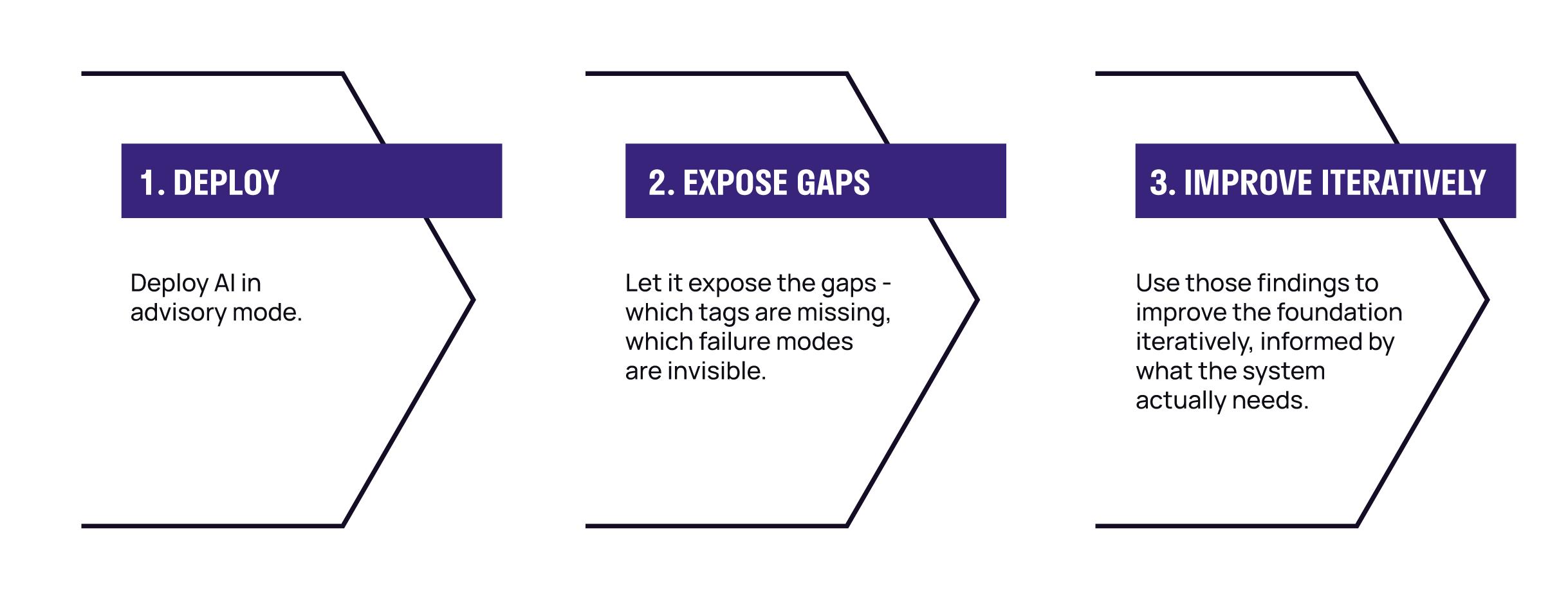
But there’s a more pragmatic path, and it starts with high-value use cases where imperfect data still delivers signal:
And while that work is underway, industrial leaders should be asking a harder question than “Is our data foundation ready for AI?”, because that question almost always returns “not yet.” The better question is: what is the cost of waiting? How many failures will occur, how many experts will retire, and how many maintenance dollars will be spent reactively while we pursue a foundation that may never feel ready?
AI shouldn’t be the final layer placed on a perfectly finished architecture, but rather the catalyst that builds it, exposing gaps, structuring what’s unstructured, and creating context from data you already have. The organizations getting real value today aren’t waiting for perfect conditions, they’re proving that the foundation and the intelligence can be built together
If you’re wondering where your site actually stands, we’ve put together a guide to help teams work through exactly this. Download it here.