
Author: Jagadish Gattu, CEO at UptimeAI
As a technology provider in the industrial sector, we often avoid use of the word “autonomous.” Why? It makes traditionally risk-averse process manufacturing companies uneasy. Over the past decade, the industrial world has come to view the word autonomous synonymously with the lights out factory, a state of 100% automation with no human presence on-site. Discrete manufacturing has adopted this vision of unmanned facilities operated by robotic automation. The continuous process industries, however, approach this vision with a healthy skepticism and a bias towards human in the loop operation.
Autonomous is a Journey, Not a Destination
In a recent article on automation.com, industry experts Michael Risse, Aditya Raghupathy, and Dan Hebert reframe the process industry view of “autonomous” as a spectrum rather than an end state. The discussion doesn’t focus on removing people from plant operations. But rather, it centers on reshaping the way industrial workers interact with technology to make faster decisions that result in smarter, safer, and more reliable operations.
The article examines recent waves of AI companies in the manufacturing sector and analyzes what successful technologies have in common. It also points out a fatal flaw in the companies that have fallen off the radar—they didn’t take autonomy far enough. The initial wave of manufacturing AI companies brought forth a buffet of insights, but still relied on a user analyze, decide, and act. When you pair that with the “newer and fewer” reality of today’s manufacturing workforce, the result is technology that can’t scale.
Manufacturing software that can deliver on the promise of ROI without a heavy reliance on users is where the market is showing signs of success. There is a balance being struck in which technology alleviates analysis and decision burden, but still provides a human operator, engineer or expert with the final go/no-go on an action.
Autonomy Built Through Trust
Operators of high-risk industrial processes want to know why they’re being asked to make a change to an otherwise stable process. The increase in quality and utility of AI model predictions is often accompanied by an increase in complexity and decrease in explainability. AI that fails to link model outputs to sources and thought processes (and do so in a way that’s understandable by any plant employee) can actually increase the latency between insight and action.
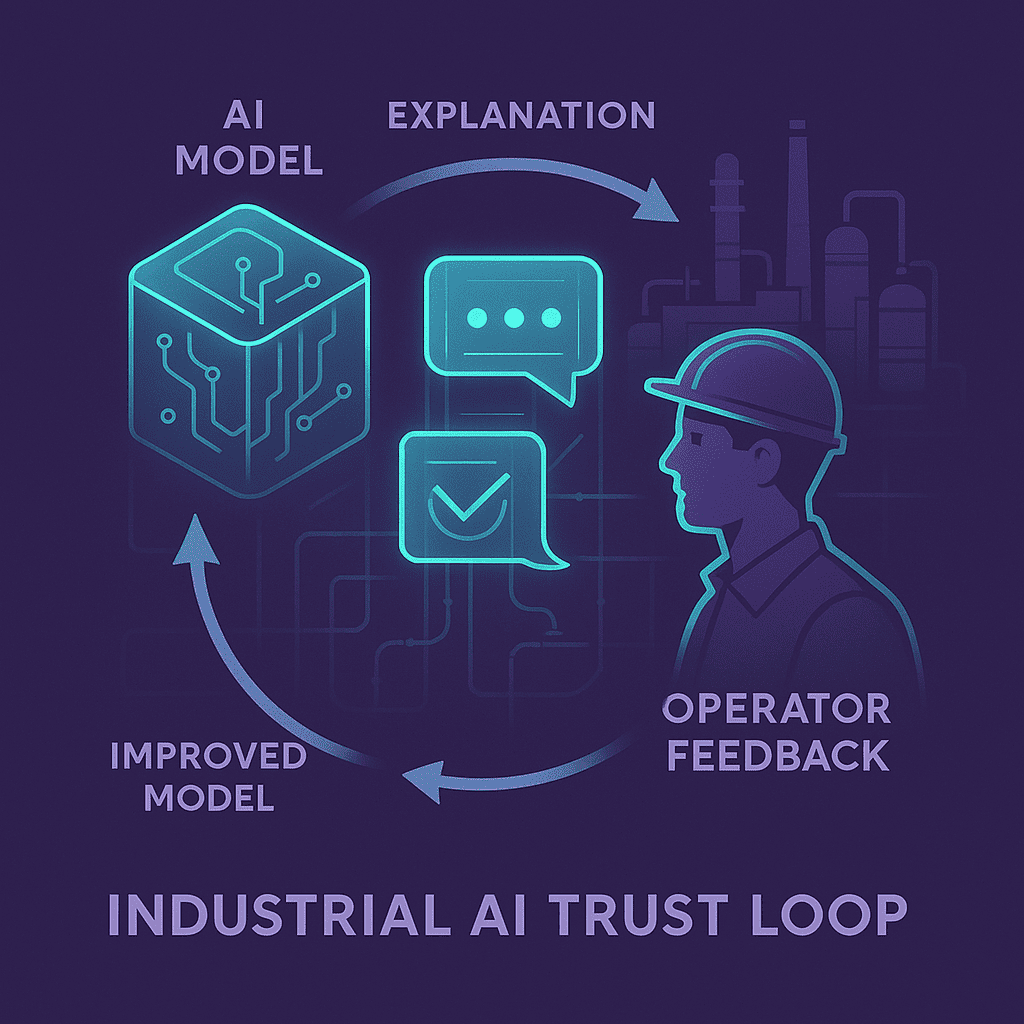
Generative AI has progressed the field of model explainability substantially by providing reasoning and rationalization. Root cause diagnoses and recommendations for optimal actions are now presented in natural language, accompanied by how the conclusion was developed and the sources that assisted the diagnoses. Recommendations rooted in reliable sources build trust.
Self-learning models present another opportunity. Embedded feedback mechanisms let process experts guide model learning and continuous improvement. When an operator can see how a model is improving over time as a result of their input, the model gains their trust.
Retiring the “Lights-Out” Mindset
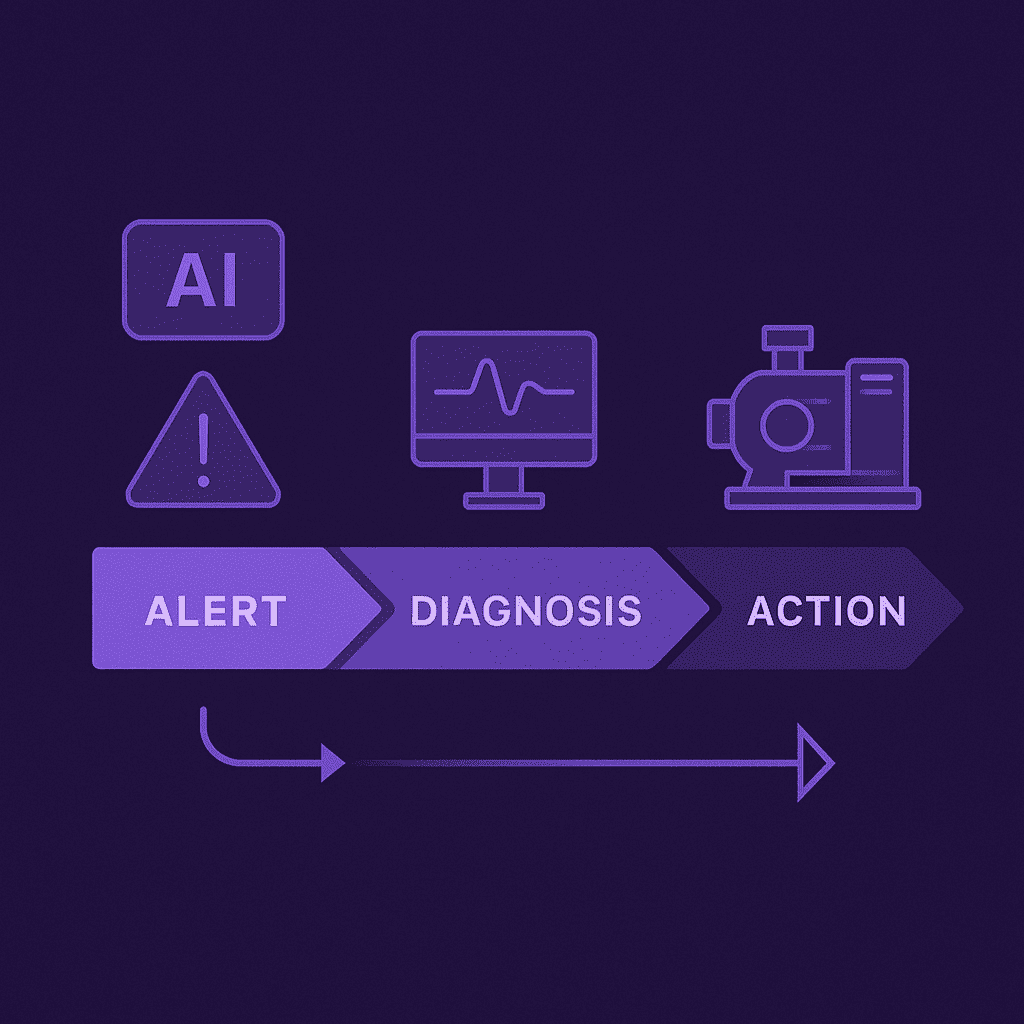 Drawing on the success of the past decade of technology companies, it’s clear that the heavy process industries aren’t itching to operate independent of onsite human expertise any time soon. They will, however, continue to push the bounds of acceptable autonomy. The next evolution of autonomous operations includes self-aware, self-learning, self-correcting technologies, still deeply connected to human expert accountability and action.
For heavy industry, this level of autonomy preserves safety and competitive advantage while uncovering new opportunities for efficiency and productivity. Companies whose human operators are augmented by AI technologies are closing the gap between actual and possible and edging peers operating at a lower level of reliability and performance optimization.
There’s no Time Like the Present
The reality of today’s manufacturing workforce shortage necessitates a progression in autonomy. UptimeAI is excited to be a part of the second wave of manufacturing AI companies expanding the definition of acceptable autonomy, using technology to complement the existing expert workforce while helping newer employees become as effective as their tenured peers. By eliminating the lag between knowing you have a problem and knowing why you have a problem, and exactly what to go do about it, we’re keeping heavy industrial companies operating safely, reliably, and optimally in a macro environment where efficient operations are critical to maintaining margins.
For a first-hand view of how heavy industrial companies are achieving this goal, get a demo.